Building a Backyard Lacrosse Practice Setup on Any Budget
You don't need a turf field to train seriously. Here's how to build a backyard setup that fits your space and budget, anchored by the one piece that does the most.
Mapping your space: how much room you really need
You need less than you think. A strip of yard about fifteen feet deep is enough to pass into a rebounder and catch the return with room to move. Check for a reasonably level patch, clearance behind your target, and nothing breakable in the line of fire. Most standard backyards have more than enough.
The essential pieces: goal, targets, and a rebounder
Three pieces cover almost everything: a goal for shooting, a target to aim at, and a rebounder for passing and catching. If you can only get one to start, the rebounder is the one that trains the skills you use most on every possession.
Setups by budget, from bare-bones to full training zone
You can build a genuinely useful setup at any budget and add to it over time. Here's how the tiers stack up.
Why a 4x7 rebounder is the anchor piece
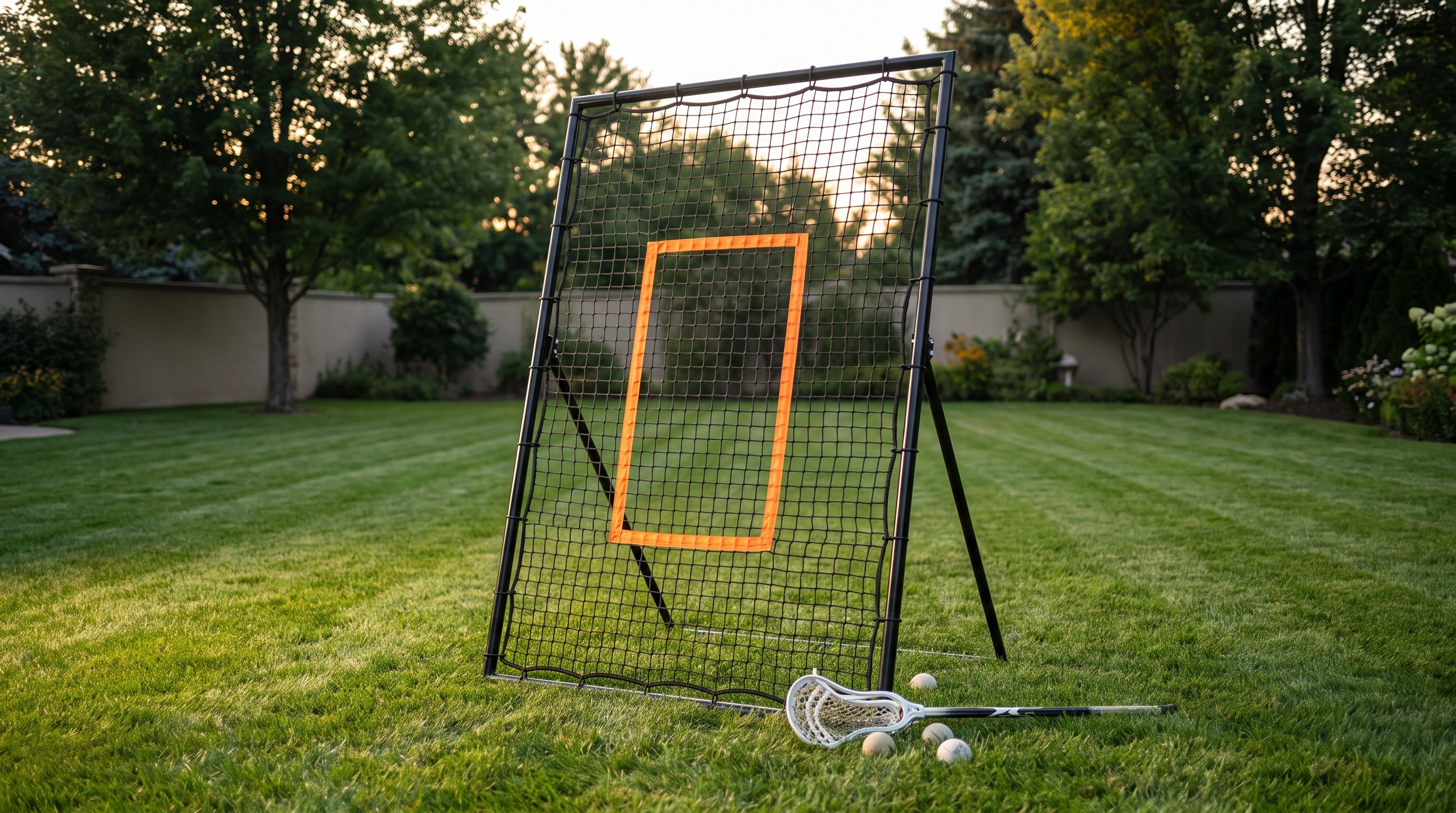
The HITEKK 7x4 ft lacrosse rebounder is the anchor because it's compact enough for most yards yet versatile enough to train the whole skill set, passing, catching, quick-stick, ground balls, and off-hand, all from one piece. Five adjustable angles mean it flexes from flat quick-stick returns to high feeds to low ground balls.
Everything else in a backyard setup supports the reps a rebounder generates.
Storage and setup tips so it stays easy to use
The setup you use is the one that's easy to get to. Keep balls in a bucket by the door, leave the rebounder staked where you train if you can, and if you need to store it, pick a spot that takes under a minute to set back up. Friction is the enemy of consistency, remove it and you'll train far more often.
Frequently asked questions
How much space do I need for a backyard lacrosse setup?
About fifteen feet of depth with clearance behind your target is enough to use a rebounder and catch the return comfortably.
What do I need for a backyard lacrosse practice area?
A goal, a target, and a rebounder cover most training. If you start with one piece, make it the rebounder.
Is a lacrosse rebounder worth it?
For solo practice, yes, it trains the most-used skills at high volume and anchors a backyard setup at any budget.
The anchor piece of any backyard setup
Compact enough for most yards, versatile enough to train it all, the HITEKK 7x4 ft rebounder with five adjustable angles.