How to Practice Lacrosse Alone: The Complete Solo Training Guide
The players who improve fastest aren't the ones with the most practices. They're the ones who put in reps when no one's watching. Here's how to train alone and actually enjoy it.
Why solo reps matter more than most players think
Team practice is where you apply skills, not where you build them. A ninety-minute practice might give you a few dozen meaningful touches on the ball once you subtract drills, water breaks, and standing in line. Skill is built in the quiet hours between practices, in the driveway and the backyard, one clean rep at a time.
Every standout you've watched has a private habit of reps behind them. The good news: you don't need talent to out-rep someone. You just need a way to do it consistently.
The #1 barrier to practicing alone
Here's the catch that stops most players: lacrosse is a two-person game. Passing and catching, the core skill, normally needs a partner. When your buddy cancels or it's 7am, the reps stop. That single dependency is why most players' skills stall between seasons.
Remove the partner problem and everything changes. That's exactly what a rebounder does, and we'll get to it, but first, the work you can do with nothing at all.
Bodyweight and footwork drills with zero equipment
You can build real lacrosse athleticism without a ball:
- Cradling laps: cradle while jogging figure-eights to build soft, automatic hands.
- Line footwork: quick lateral shuffles and split-steps over a crack in the driveway.
- Wall split-dodges: practice change-of-direction against an imaginary defender.
- Ground-ball scoops: drop a ball, approach low, scoop through, and protect.
How a rebounder removes the partner problem entirely
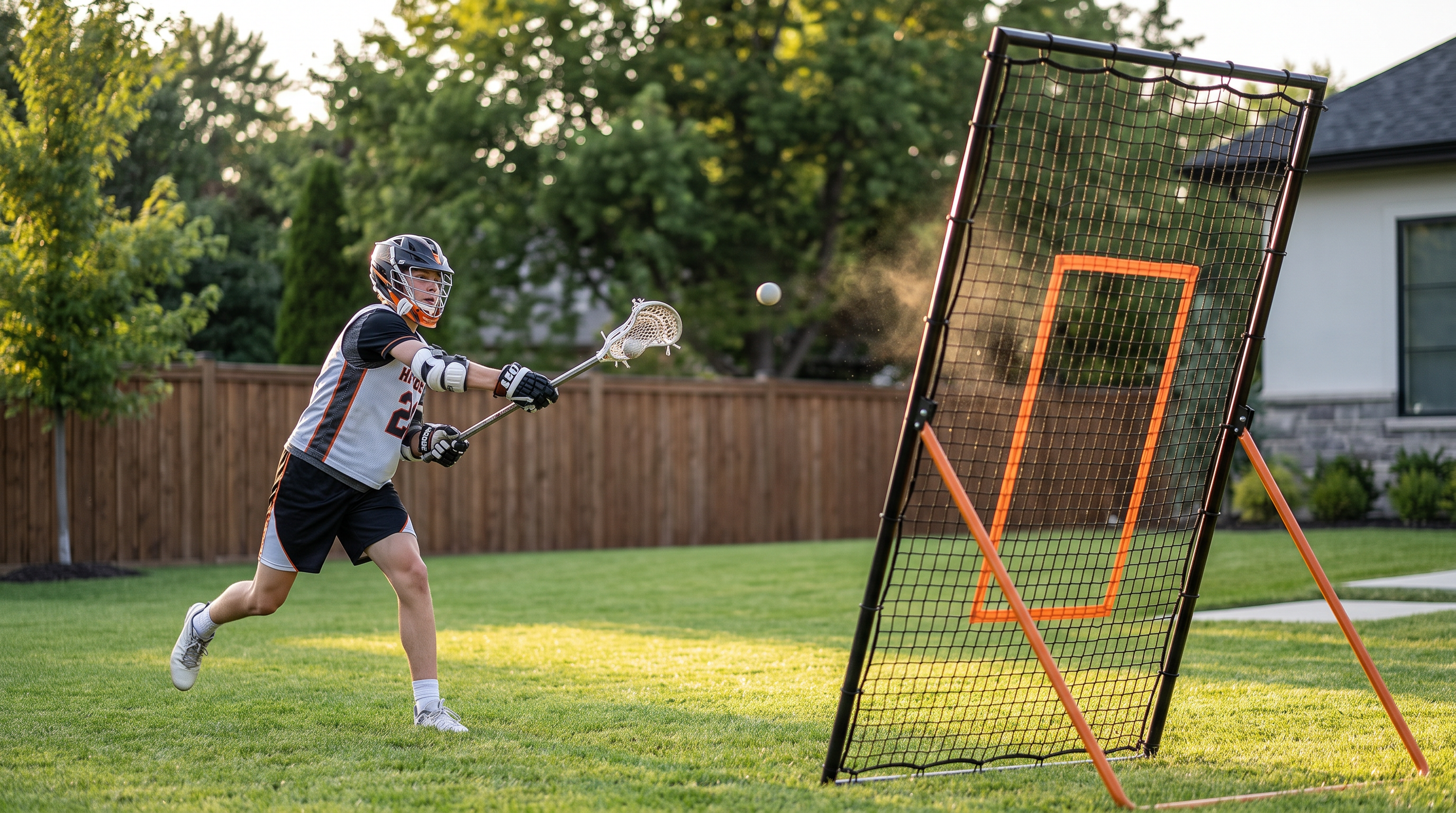
A rebounder is a taut mesh surface on a frame that fires the ball back to you the instant you pass into it. It is, functionally, a partner who never gets tired and never cancels. Throw a pass, get a catch, repeat, for as long as you want.
The HITEKK 7x4 ft lacrosse rebounder is built for exactly this: a full 4x7 ft catching surface and five adjustable angles, so you can rehearse chest passes, high feeds, and ground balls without another person in the yard. You go from a few dozen touches at practice to hundreds in a single solo session.
Building a 20-minute session you'll actually stick to
The best session is the one you repeat. Keep it short and identical so it becomes a habit rather than a decision. Here's a simple structure that hits every core skill in twenty minutes.
Do this four times a week and you'll have logged more quality touches by month's end than most players get in a full season of team practice.
Frequently asked questions
Can you really get better at lacrosse practicing alone?
Yes. Most skill development is repetition of fundamentals, and passing, catching, cradling, and ground balls can all be trained solo, especially with a rebounder to return the ball.
How often should I practice alone?
Short and frequent beats long and rare. Four 20-minute sessions a week will build skill faster than one long weekend session.
What equipment do I need to practice lacrosse by myself?
A stick, a ball or two, and a rebounder or wall. The rebounder is the piece that unlocks unlimited passing and catching reps without a partner.
Turn your yard into a full-time practice partner
The HITEKK 7x4 ft rebounder gives you unlimited passing and catching reps, five adjustable angles, and a weatherproof frame that lives outside all season.